Apple Watch = Must Have for 2015

Standard

The reviews are creeping out. The Wall Street Journal, Forbes, and CNET have all spent some time with the device. Their voices are a mixed bag of nerdery. Techie gals criticizing the clumsy computerized fashion mash-up. Fashionistas wondering when such practicality has been packaged so well. Regardless of where you or your favorite reviewer land, the Apple Watch will be THE MUST HAVE for 2015.
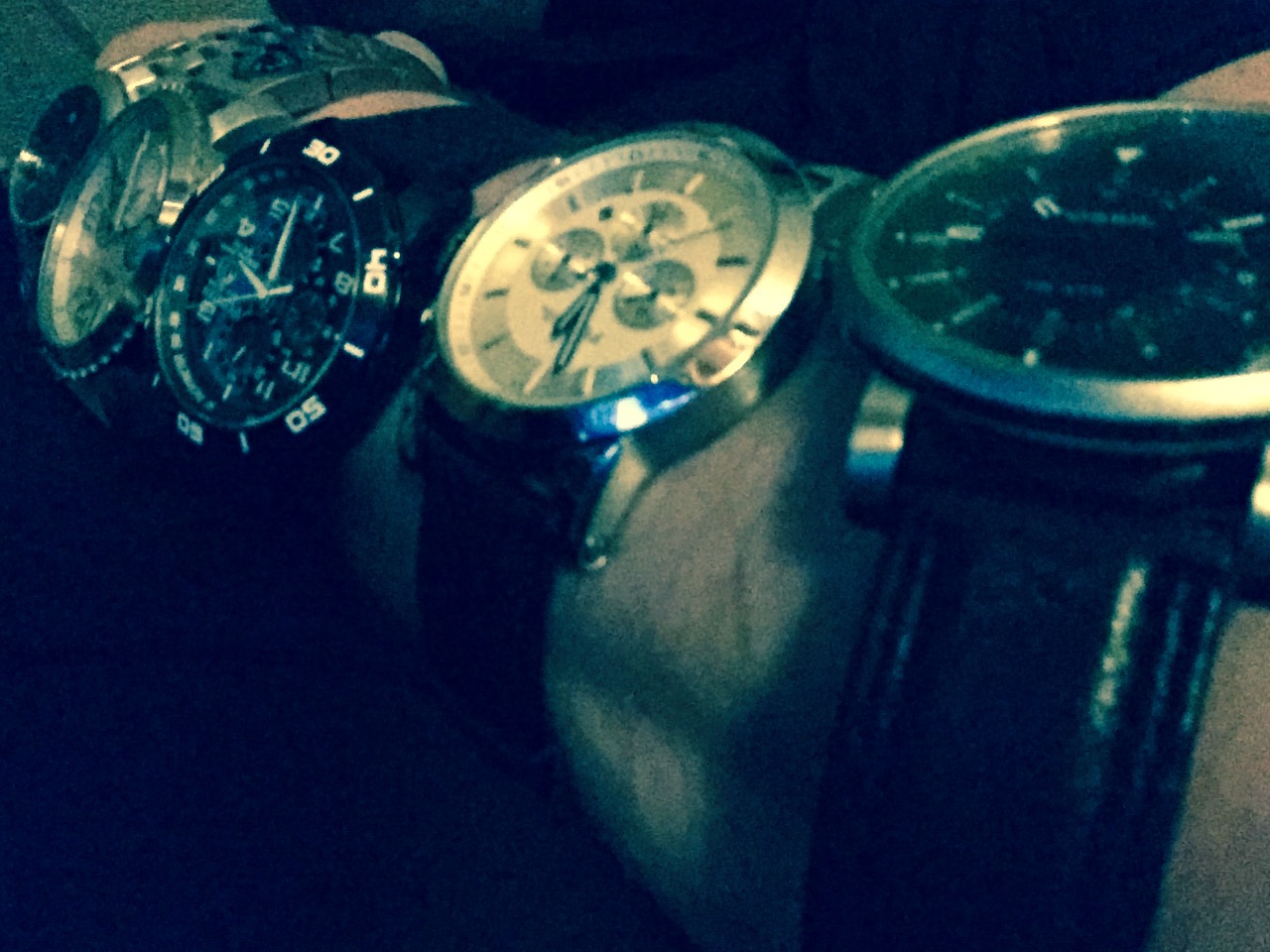
The average U.S. man has 5 watches. #Metrosexual

The average U.S. man has 5 watches. #Metrosexual

Some detractors wonder out loud “Who’s going to want another watch, nonetheless one that costs triple the price?” But the market is already there. Wrists are yearning to be gauged on their health and appearance.  Did you know that 3.3 million fitness bands and activity trackers have been sold between April 2013 and March 2014 in the U.S.? The Fossil Group, Inc., which operates over 10 global timepiece brands across a variety of price spectrums, sold $1.5 billion in watches in 2014. The wristwatch market is STRONG as Bloomberg reported in February that the average male U.S. consumer owns 5 watches.

Detractors will point out that the Apple Watch isn’t a stand-alone product, but rather a pricey accessory requiring the newest iOS mobile operating system. How limiting of a factor might that be? As of October 2014 Apple has sold over 105 million iPhone 5’s, and as of Q1 2015 Apple sold over 74 millions iPhone 6’s. That’s a large customer base, and it’s growing at a pretty aggressive rate with deeper cellular discounts and 0% finance programs to facilitate upgrading and first-time client acquisition. “Who’s going to want another watch, nonetheless one that costs triple the price?” Apple customers. That’s who.

It’s the most customizable watch, or computerized device, EVER. From a watch perspective, brands like Michele and Fossil have offered customization in a variety of bands and metals. None of these brands offer the multiples of customizable variations that the Apple Watch and its small retina-raving face will promise. Can you imagine the visual capabilities the Apple Watch customer will have once the third party venders check in with a new phalanx of covers, bands, and apps for deeper customization of the product? “Who’s going to want another watch, nonetheless one that costs triple the price?” Another watch? It’s all of the watches you planned on buying in the future wrapped into a 42mm case. Take the cumulative cost of those five watches the average U.S. metrosexual owns, toss in a FitBit or two, and you’ll most likely arrive between $500 to $1,200 (unless you have premium Tag Heaer taste). It’s easy to conclude that the Apple Watch brings great value as a complete substitute.

Some critics seem obsessed with the reality that Apple will release future iterations of the device, and this truth is waved in your face  while demanding you wait for the Apple Watch 2 and it’s ignorantly assumed enhancements. Don’t soil your bell-bottoms when I tell you this, but obsolescence exists in the world of fashion and those trends can move just as quickly as shifts within the tech sector. Not wearing your “Don’t Tase Me Bro” t-shirt anymore? The Apple Watch will be as durable to natural shifts in trends and technical abilities or limitations as ANYTHING ELSE you already buy over-and-over again as the seasons zing by.

I believe it was 2010, weeks prior to the launch of the first iPad, that I heard critics declare “Who’s going to want a large iPhone that doesn’t take calls?”
Me and my hundreds of millions of minions.

NBA Financial Player of the Year: David Stern

Standard

Once in a while someone will introduce an intriguing sports debate: Who is the best commissioner of North American professional sports? Although former NBA commissioner David Stern has retired, I think he’s at least the NBA’s “Financial Player of the Year.”

The fact most often neglected when these debates unfold is the concept placing each league’s commissioners as employees working for the various groups of owners. Their job? Make sure things run smoothly and increase shareholder wealth. Fans usually neglect the aforementioned methods of measurement. Instead, we are naturally forced to focus on the decisions made on the surface (instant replay implementation, rules changes, equipment modifications, enforcing policies). After all, it’s difficult for fans to assess a commissioner’s financial impact on privately held firms spread out amongst very different markets.

The headline of the month seems to be the reported sale of the L.A. Clippers for $2 billion. This is an incredible outcome from the Donald Sterling scandal, which forced the new NBA commissioner, Adam Silver, and the existing NBA owners to enforce the expulsion of an owner and sale of his franchise. League members and fans will benefit from the exclusion of a man who is a complete cultural mismatch with the brand. Others will point to the bittersweet reality that Donald Sterling will rake in an incredible profit.

Although the league’s franchises are privately held firms, we get a glimpse of the numbers when a sale is made. To illustrate why I am applauding David Stern’s financial acumen, take a look at this timeline:

  • 2006 – Seattle Supersonics sold for $350 million
  • 2010 – NBA buys New Orleans Hornets for $300 million
  • 2012 – Memphis Grizzlies sold for $350 million
  • 2012 – NBA sells New Orleans Hornets for $338 million
  • 2014 – Milwaukee Bucks sold for $550 million
  • 2014 – L.A. Clippers receive bid to purchase for $2 BILLION

If you look at the NBA map you’ll notice that these transactions are happening all over the U.S. and the spread between them is tens and hundreds of millions of dollars. What you won’t see is how David Stern leveraged every available financial resource to react to a fluctuating economy. He made a variety of decisions to preserve franchise values and avoid market corrections on the hedge that the domestic economy would recover. What were those moves?

Starting in 2006, the Seattle Supersonics sale established general market pricing ($350 million). The New Orleans Hornets’ owner went broke in 2010 and couldn’t afford to maintain his business. He tried to sell, but no one was able to meet his price. The risk of settling for a number too far south of the Sonics’ $350 million sales price was a reality that Stern avoided. Stern convinced the NBA to buy the Hornets for $300 million. He also secured $200 million of additional credit for a league accessible emergency fund for all franchises to use. The NBA held onto the Hornets and waited out the most severe economic rain clouds. Two years later, the NBA sells the Hornets for $338 million, including $50 million in commitments from New Orleans to update their home arena ($383 million of ownership “value”). And then we see consecutive sales records occur just two years later, one of which is achieved in a smaller market (Milwaukee)!

This trajectory in NBA franchise sales prices is not an accident. It’s the result of a combination of factors, both economic and strategic. Here’s a fun question. What would have happened if Stern let the market dictate pricing for the Hornets sale in 2010? What if the best Hornets’ offer was $200 million?

It is with great honor I present this year’s NBA “Financial Player of the Year”, David Stern.